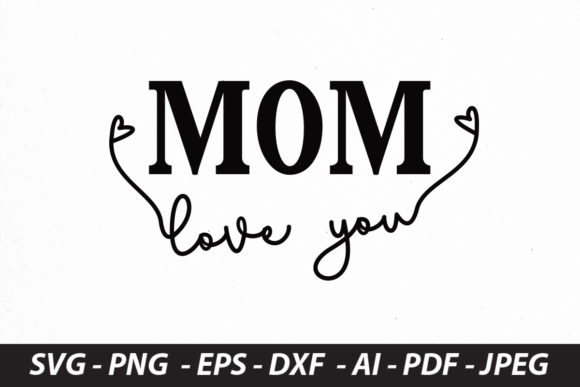
MOM LOVE YOU Design Review for Embroidery Projects
As a professional embroidery designer and product reviewer, I approach every new digital asset with a critical eye toward its stitch-out potential. When evaluating the MOM LOVE YOU Svg,dxf,png, Eps ,pdf package, my primary concern is not just how the graphic looks on a screen, but how it translates into thread on fabric. This design falls squarely within the Crafts and Graphics categories, targeting a demographic that values sentimentality and clarity. For small business owners, Etsy sellers, and makers, this specific phrase carries significant commercial weight, particularly for Mother’s Day, birthdays, and new mom gifts. However, the success of any handmade product relies entirely on the technical execution of the source file.
First Impressions and Visual Hierarchy
Upon opening the ZIP file containing SVG, Transparent PNG, EPS, DXF, PDF, JPEG, and AI files, the immediate advantage is format versatility. While many of these formats are intended for cutting machines or print, an embroidery digitizer needs clean vector lines (SVG, EPS, or AI) to create a superior machine embroidery design. The visual personality of "MOM LOVE YOU" typically suggests a bold, readable aesthetic. In my experience reviewing similar typography-based designs, the mood should be warm yet structured. If the font is too script-heavy or thin, it risks disappearing into the fabric texture. A successful design in this niche balances decorative flair with legibility. When assessing this asset for real project use, I look for distinct separation between letters to prevent thread buildup and ensure the message reads clearly from a distance.
Real-World Application: The Custom Sweatshirt Test
To truly judge the viability of MOM LOVE YOU Svg,dxf,png, Eps ,pdf, I mentally place it in a high-demand scenario: custom apparel, specifically a crewneck sweatshirt. This is a staple for craft businesses and personalized gift shops. Sweatshirts present unique challenges due to their stretchy knit structure and potential for pilling. If I were preparing this for a client order, I would first import the vector file into my digitizing software to verify line smoothness. Jagged vectors result in jagged satin stitches, which looks unprofessional on finished products.
For a sweatshirt embroidery project, the design needs adequate underlay to stabilize the knit before the top stitching lays down. I would evaluate whether the lettering thickness supports a standard satin stitch or if it requires a fill stitch for wider elements. Thin, elegant fonts often fail on fleece because the fabric swallows the thread. Conversely, overly dense block letters can cause puckering or needle damage. The ideal application of this design on apparel strikes a balance—bold enough to cover the fabric texture but open enough to maintain the garment's drape. This consideration directly impacts customer trust; a stiff, bulletproof patch of thread feels cheap, while a well-digitized design feels like premium boutique merchandise.
Navigating Fabric Limitations and Hoop Constraints
Not every surface is suitable for this specific phrase design. As an experienced reviewer, I must highlight where caution is necessary. Small hoop sizes are a common pitfall. If you attempt to shrink "MOM LOVE YOU" to fit a 4x4 hoop for a baby onesie or sleeve cuff, the internal counters of letters like 'O' or 'A' may close up during stitching. Always check the minimum recommended size before committing to baby embroidery or detailed patches. Furthermore, textured fabrics like terry cloth towels or waffle knits require a water-soluble topping to prevent the stitches from sinking. Without this step, even a perfectly digitized file will look messy.
Stretchy fabrics demand rigorous stabilization. When using this design on performance wear or lightweight tees, a cut-away stabilizer is non-negotiable to prevent distortion. Dark fabrics introduce another variable; thread color contrast is paramount. White or metallic threads on navy fabric pop beautifully, but low-contrast combinations make the sentiment unreadable. I always recommend testing light and dark fabric backgrounds via printable mockups before stitching. Additionally, curved surfaces like caps require specialized digitizing. A flat design file cannot simply be hooped onto a curved cap without distortion; it often requires re-digitizing with specific cap compensation settings to ensure the baseline follows the curve naturally.
Commercial Value and Professional Presentation
For Etsy sellers and creative entrepreneurs, MOM LOVE YOU Svg,dxf,png, Eps ,pdf represents more than a graphic; it is a revenue stream. However, market saturation means quality is your differentiator. Using the included transparent PNG and JPEG files allows for the creation of professional listing photos and digital product previews without needing to stitch every variation immediately. High-quality mockups build buyer engagement and set accurate expectations. When selling finished items like tote bags or aprons, the crispness of the embroidery signals brand consistency. A frayed or poorly registered design devalues the entire shop.
Licensing is equally critical. Before listing any item derived from this file, verify the commercial terms. Does the license allow for physical product sales, digital file resale, or both? Confirming this protects your business. For those selling the digital embroidery file itself, providing test stitch-outs in your listing photos demonstrates confidence and reduces customer support inquiries regarding stitch density or compatibility.
Essential Designer Notes for Success
Based on my evaluation of similar assets in the Crafts category, here are practical steps to ensure success with this design:
- Test Stitch First: Never run a new design on a final product without a test on scrap fabric of the same weight and texture. Check for registration issues between outline and fill stitches.
- Verify Vector Quality: Since the package includes SVG and AI files, inspect the nodes. Excessive nodes can cause machine hesitation. Simplify paths if necessary before digitizing.
- Stabilizer Selection: Match your stabilizer to the fabric, not the design. Use tear-away for stable woven fabrics and cut-away for knits and stretch materials.
- Thread Contrast Check: Evaluate visibility at arm's length. If the text blends into the background, change the thread color or add an outline.
- Hoop Size Confirmation: Ensure your chosen hoop accommodates the design with at least a 0.5-inch margin for proper tension. Over-tightening causes distortion.
- Wash Testing: For items like kitchen towels or baby clothes that face frequent laundering, test wash durability. Satin stitches may need securing stitches at corners to prevent unraveling over time.
- Mockup Validation: Use the provided PNG files to create realistic mockups. Avoid floating designs; show them on actual garments to help customers visualize scale and placement.
Final Verdict on Usability
The MOM LOVE YOU Svg,dxf,png, Eps ,pdf collection offers a robust foundation for makers, provided it is treated as a starting point rather than a guaranteed finish. Its multi-format nature supports both vinyl crafters and embroidery professionals, making it a versatile asset for mixed-media businesses. For embroidery specifically, success depends on respecting the physics of thread and fabric. By prioritizing legibility, appropriate stabilization, and commercial-grade finishing, this design can elevate your product line from amateur to professional. Whether creating a heartfelt holiday gift or scaling a custom apparel business, the technical integrity of your execution defines the value. Always review, test, and refine to ensure the final embroidered product honors the sentiment it aims to convey.